Dotient Blog
"Olo": The New Color Discovered by Stimulating the Eye With Lasers
Researchers have discovered a new color called olo — a saturated blue-green that cannot be seen with the naked eye. Using precision laser stimulation of individual cone cells, they produced a percept that does not exist in natural human vision.

How Human Color Vision Normally Works
The human retina contains three types of cone cells, each sensitive to a different range of wavelengths. S cones respond to short wavelengths (blue), M cones to medium wavelengths (green), and L cones to long wavelengths (red). Every color you have ever seen is the result of some combination of these three signals.
Local Semantic Search: Models, Math, and On-Device Optimization in 2026
How embedding models, vector search, and on-device optimization techniques make local semantic search practical on everyday hardware. A look at the math, the trending models of 2026, and the tricks to run them on a laptop.
The Core Idea: Embeddings
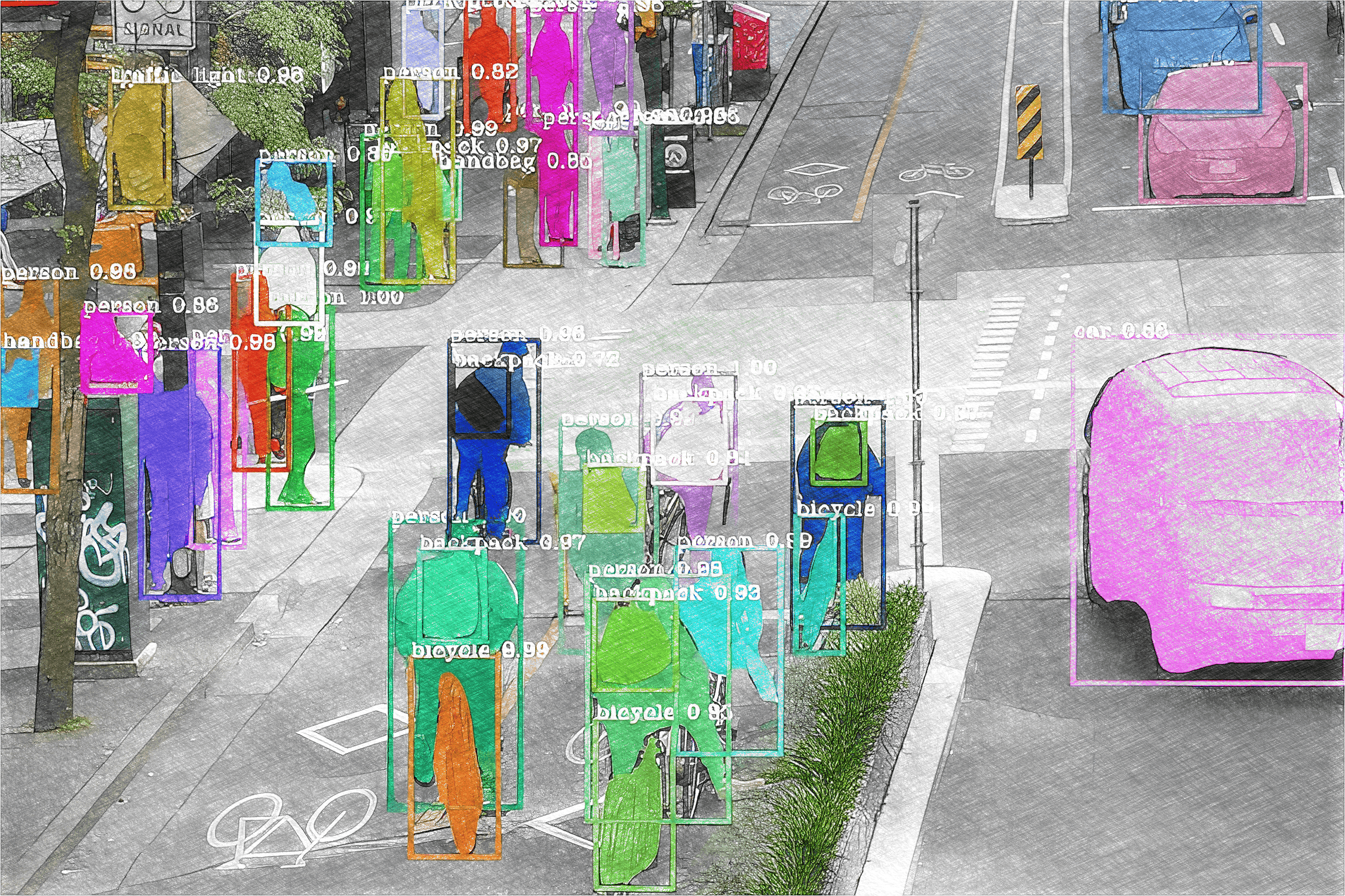
At the heart of every semantic search system is an embedding model. An embedding model takes any input, a sentence, an image, an audio clip, and converts it into a fixed-length vector of floating-point numbers. A good embedding has the property that similar inputs produce similar vectors. The sentence 'a golden retriever playing fetch' should be close in vector space to a photo of a golden retriever with a ball.
Microsoft's Majorana Particle: Topological Qubits and What They Actually Mean
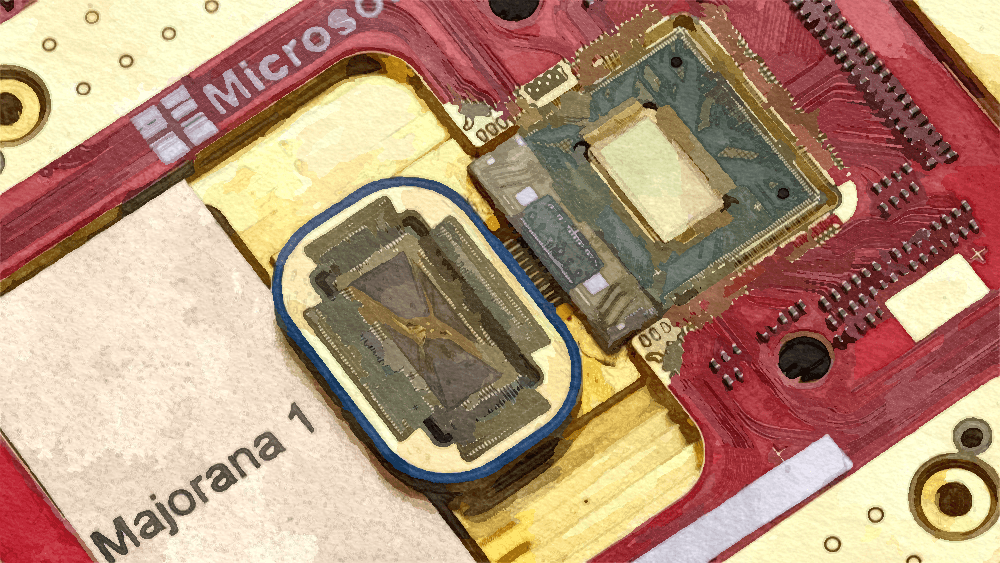
Microsoft published evidence of a topological qubit built from Majorana zero modes in 2025. Here is what a Majorana particle actually is, how the qubit works, and why topological protection changes the math on fault-tolerant quantum computing.
What Is a Majorana Particle?
The story starts in 1937, when the Italian physicist Ettore Majorana published a paper that modified the Dirac equation to allow a particle that is its own antiparticle. Dirac had shown in 1928 that the electron must have an antiparticle (the positron, discovered in 1932). Majorana asked: what if a particle existed where the wavefunction of the particle and its antiparticle are the same?
NASA's Roman Space Telescope: The Survey Telescope That Will Reshape Astronomy
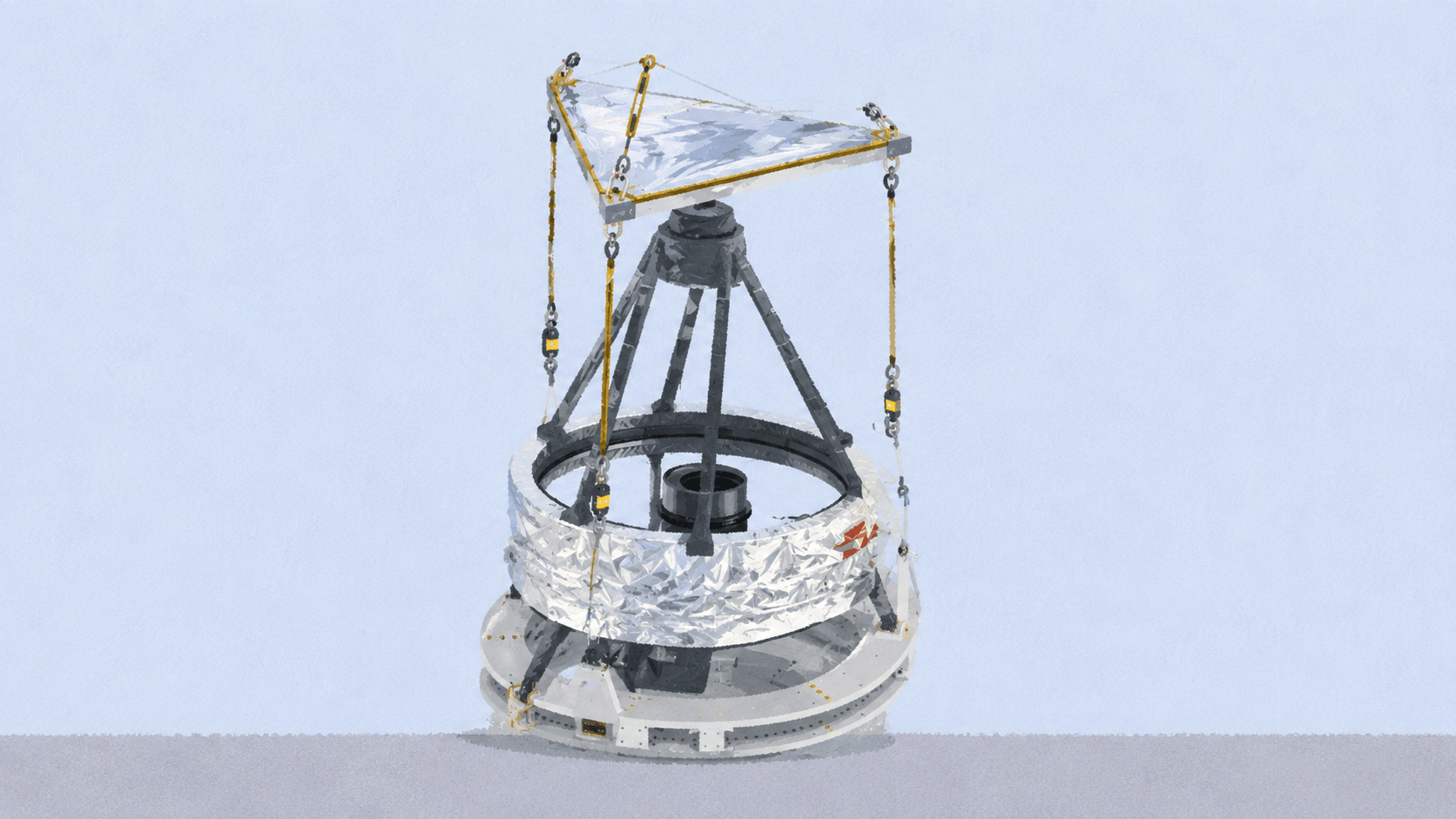
On August 30, the Nancy Grace Roman Space Telescope will launch from Kennedy Space Center on a Falcon Heavy. It carries a mirror the same size as Hubble's, a camera a hundred times wider, and a coronagraph that can see planets a hundred million times fainter than their stars.
The Wide vs. Deep Problem
To understand why Roman matters, you have to understand the fundamental trade-off that every space telescope makes: wide versus deep. Hubble was designed for detail. Its 2.4-meter mirror produces sharp images, but each exposure covers a tiny patch of sky. Webb is even more extreme. Roman flips the model. It uses the same mirror size as Hubble but distributes light across a much wider area.
1X's NEO Hand: A Technical and Economic Analysis
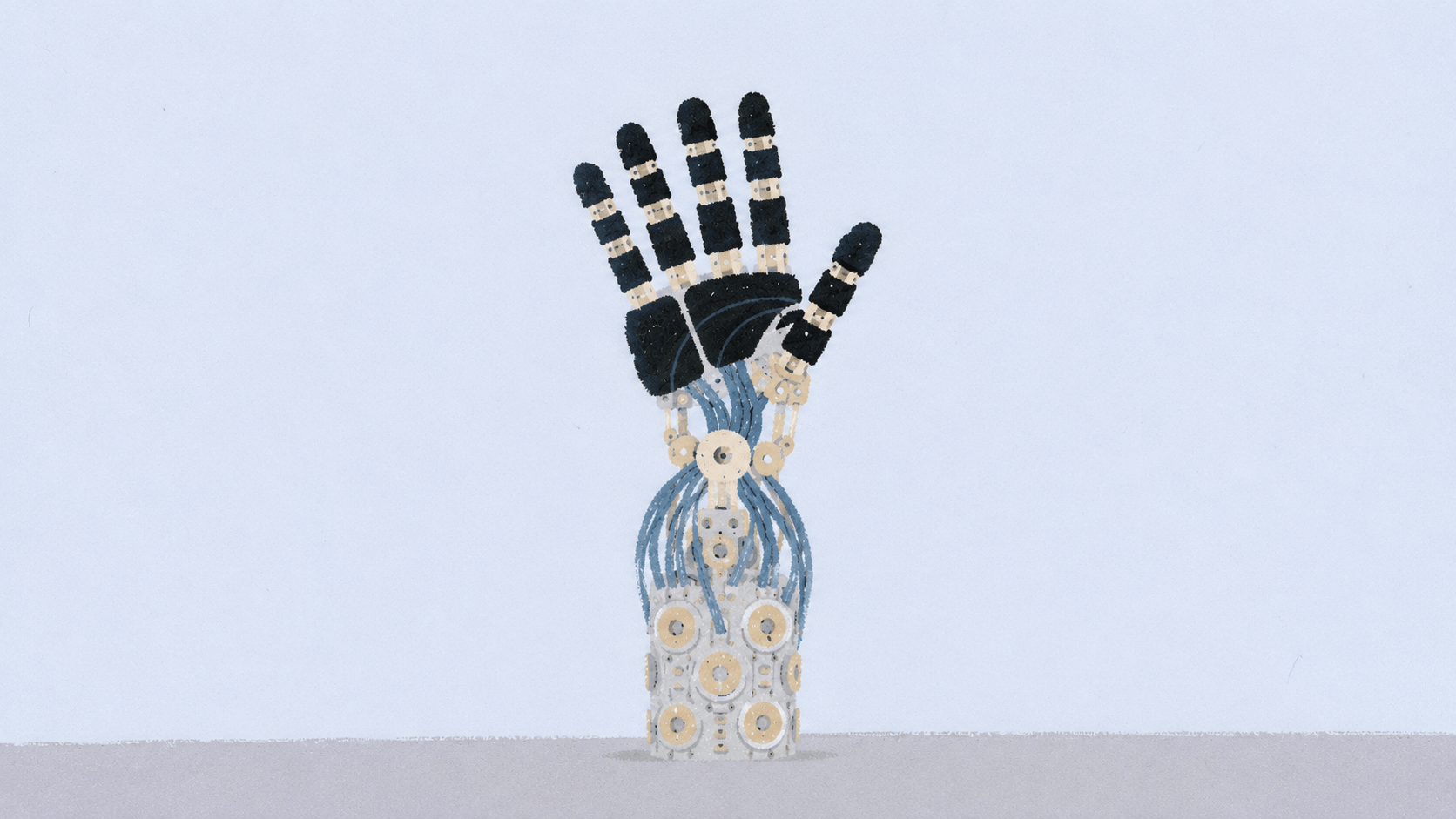
A look at 1X's 25-degree-of-freedom tendon-driven robot hand. What makes it different, why the engineering is genuinely impressive, and why the economics are brutal.
The Write-Only Problem
To understand why 1X's hand matters, you have to understand why most robot hands do not. The vast majority of robotic hands today are what 1X calls 'write-only' devices. You send a position command; the hand moves there; nothing useful comes back. The culprit is gearing. Industrial robot hands typically use gear ratios of 100:1 to 200:1. At those ratios, friction in the transmission absorbs any contact force before it ever reaches the motor.
Dotient for Business: How Teams Use AI Visual Search
Creative agencies, marketing departments, and design teams use Dotient to find brand assets, campaign collateral, and client deliverables by describing what they look like. Local AI search that keeps your business files private on your own network with no cloud uploads.
The Business Problem: Asset Chaos
Every creative team knows the pain. A shared drive with years of accumulated files organized in folder structures that made sense to whoever set them up and no one else. Client deliverables mixed with internal templates. Logos scattered across multiple campaign folders. Reference images buried inside project archives. The phrase 'I know we have that somewhere' gets said multiple times a week. Traditional file search doesnt help because it only looks at filenames.
Best Search Tools 2026: Top File Search Software for Windows & Mac
Dotient is an AI-powered visual search tool for Windows and macOS that finds files by what they look like, not by filename. It competes with Everything (voidtools) for speed, Google Photos for AI search, and Adobe Bridge for creative professionals, but runs entirely offline.
Overview: The File Search Landscape in 2026
File search in 2026 offers more options than ever, but most tools still focus on what a file is named rather than what it is. Whether you're on Windows or macOS, the tools you choose depend on whether you need filename speed, cloud-based AI, metadata organization, or truly private visual search. Here's how the major options compare.
How to Find Files on Your Computer Faster in 2026
Dotient is a local AI file search tool that helps you find files by describing what they look like instead of guessing filenames. It indexes everything on your machine and runs entirely offline on Windows and Mac.
The Problem with Traditional File Search
If you've ever spent minutes hunting for a file because you couldn't remember its name, you're not alone. Traditional file search on Windows and macOS relies on filenames, file types, and metadata, but none of that helps when you remember what a file looks like. Whether it's a photo from two years ago, a specific design asset, or a chart inside a PDF, searching by filename is fundamentally limited.
Local AI Search Offline: Find Files Without Internet
Local AI search offline uses on-device machine learning to index and search your files by what they look like and contain, with zero cloud uploads. Dotient runs quantized vision and text models entirely on your Windows or Mac machine with no internet required.
What is Local AI Search?
Local AI search refers to artificial intelligence-powered file search that runs entirely on your own computer, without sending data to cloud servers. Unlike Google Photos, Adobe Sensei, or other cloud-based AI services, local AI search keeps your files private by processing everything on your device. The AI models run on your own CPU or GPU using optimized runtimes like ONNX Runtime.
AI File Search vs Manual Searching: Which is Better in 2026?
AI file search finds files by their visual content using on-device machine learning, while manual searching relies on filenames and folder navigation. Dotient brings AI-powered visual search to Windows and Mac with full offline privacy.
The Core Difference: Content vs. Name
Traditional file search, whether through Windows File Explorer, macOS Finder, or tools like Everything (voidtools), works by matching filenames, file paths, and metadata. This is fast when you know the filename but useless when you don't. Folder-based organization helps, but only if you maintain it consistently over years of accumulated files. AI-powered visual search works fundamentally differently.
How to Organize Photos Without Manual Tagging
AI-powered visual search lets you organize photos by what they look like, not by tags or folders. Dotient automatically indexes your photos on your own computer, creates searchable embeddings, and lets you find any image by describing it in natural language, entirely offline.
Stop Tagging, Start Searching
Manual photo organization is a tax on your future self. You import photos from your phone, camera, or downloads, promising to tag and sort them 'later.' But later never comes, and years later you have thousands of photos in folders named '2024-03' or 'New folder (3)'. You know the photos are there somewhere, but finding a specific image means browsing folder by folder. The alternative is AI-powered visual search.