1X's NEO Hand Is a Genuine Breakthrough. The Business May Not Survive It.
On July 9, 1X unveiled a 25-degree-of-freedom tendon-driven hand for its NEO humanoid that can assemble LEGO, play videogames, and zip jackets. The engineering is genuinely impressive. The economics are another story.
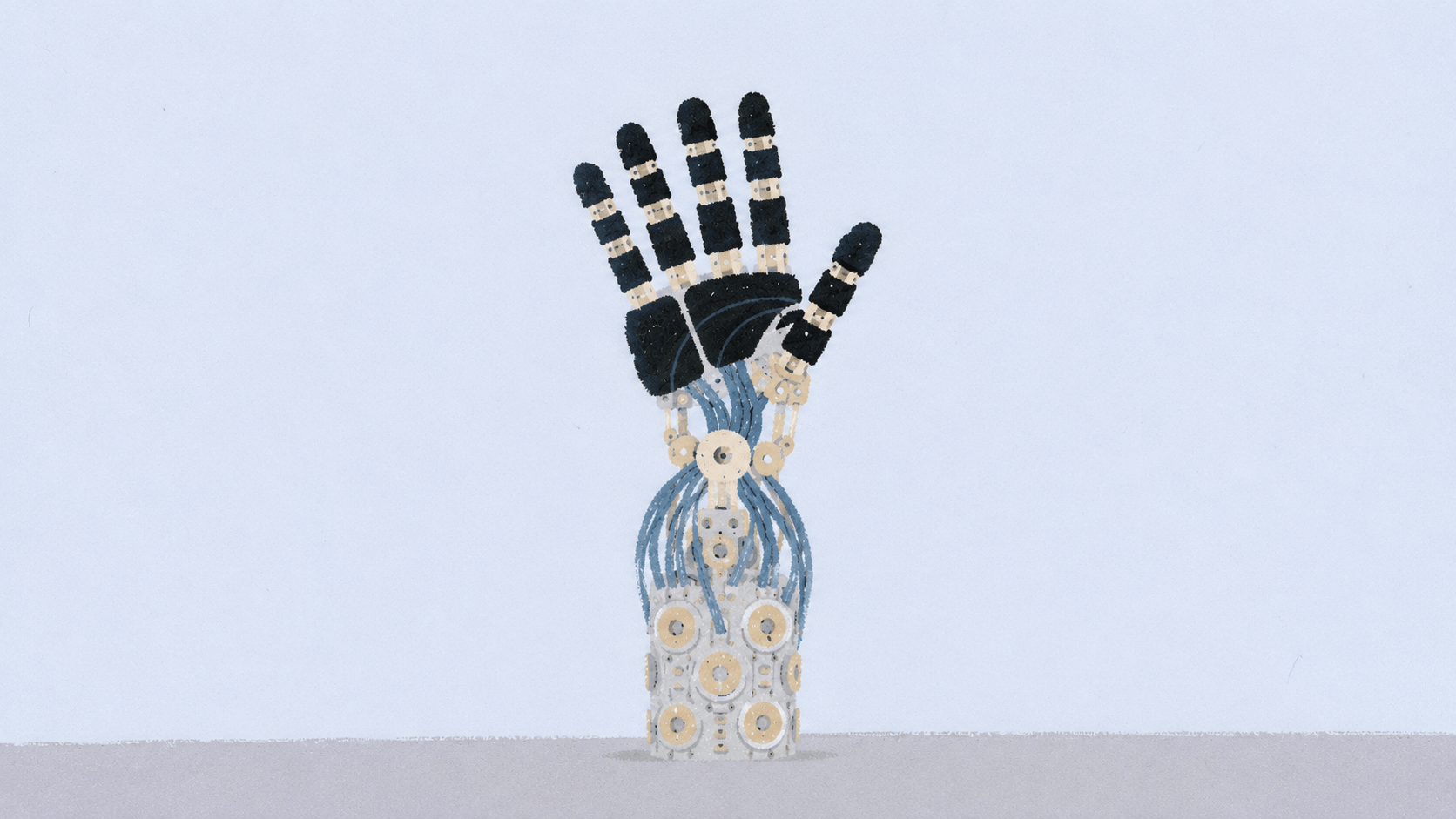
On July 9, 2026, 1X Technologies pulled back the curtain on its new hand for the NEO humanoid robot. The specs are eye-catching: 25 degrees of freedom, tendon-driven actuation, fully force-controlled and backdrivable joints, high-resolution tactile sensing, IP68 waterproofing, food-safe materials. The demo video shows NEO assembling LEGO structures, flicking in on and off a light, ripping grapes from the vine, zipping a jacket, holding a videogame controller, as well as opening up a chip bag, and performing sign language.
It is, on the surface, exactly the kind of hardware reveal the humanoid robotics space has been waiting for. 1X's CEO Bernt Børnich called it “the most advanced robotic hand in human history.” John Koetsier at Forbes described it as “mind-blowing.” The company’s framing, “an API to the physical world,” is the kind of phrase that lands with impact.
The technology deserves the attention. But there is a quieter story running alongside the impressive hardware, and it is about whether 1X can afford to ship it.
The Write-Only Problem
To understand why 1X’s hand matters, you have to understand why most robot hands do not. The vast majority of robotic hands today are what 1X calls “write-only” devices. You send a position command; the hand moves there; nothing useful comes back. The culprit is gearing. Industrial robot hands typically use gear ratios of 100:1 to 200:1. At those ratios, friction in the transmission absorbs any contact force before it ever reaches the motor. The hand cannot feel what it is touching. Engineers compensate by bolting cameras onto the wrist and trying to infer contact through vision, but that approach fails for the tasks that matter most: handling transparent objects, deformable objects, objects hidden from view.
1X’s hand sidesteps this entirely. Its tendon drive operates at gear ratios of approximately 5:1 to 15:1, an order of magnitude lower than the industry standard. Every joint is both a motor and a sensor. Push on a finger and it yields, and reports exactly how hard you pushed. 1X calls this “force transparency.” The same physical path that delivers force to the world carries sensory information back from it. The hand is read-write.
This is not a marginal improvement. It is a fundamentally different approach to manipulation, and it opens a much wider range of tasks than position-controlled hands can handle.
The Tactile Layer
Force transparency gives the hand proprioception: it always knows the position and effort of every joint without needing to look, the same way you can touch your fingertips together with your eyes shut. But manipulation also requires skin. 1X’s hand includes high-resolution tactile sensors across the fingertips and contact surfaces, measuring normal force, contact location, and crucially, shear. The shear channel is the interesting one. It lets the hand detect when an object is starting to slip before it is lost, and trigger a re-grip in real time. This is the difference between a hand that can pour tea and one that tips the kettle over.
The specifications back this up: ±0.2 mm positioning accuracy, 45 N of distal pinch force, 3.5 Nm of thumb torque, 17.75 Nm at the wrist. The hand is strong enough to lift a 20 lb weight through the wrist and precise enough to plug in a USB-C connector. It is sealed to IP68 and constructed from food-safe materials, which means NEO can wash its own hands after cooking, a small but telling indicator of the target use case.
On paper, the 25 DoF (the human hand has approximately 27) puts 1X ahead of most competitors: Singapore’s Sharpa Wave has 22, China’s Wuji Hand has 20, and Shadow Robot’s hand has 24 movements across 20 DoF. But DoF counts are a proxy, not a differentiator. What matters is what those joints can feel. 1X’s claim to leadership rests on force transparency, not joint counts.
The Teleoperation Caveat
It is important to be precise about what the hand can do on its own versus what it can do with human help. 1X has been transparent that some demonstrations, notably the American Sign Language sequence, were performed via teleoperation. More broadly, 1X plans to deploy a system called Scheduled Expert Mode, where human operators step in remotely for tasks NEO cannot handle autonomously.
This is not unusual for a company at this stage. Every humanoid company uses teleoperation to demonstrate hardware capability that their AI has not yet learned to exploit. Dar Sleeper, 1X’s Chief Business Officer, told me the hand ships with “more hardware capability than the AI knows how to use,” with over-the-air updates planned to unlock new skills over time. That is an honest framing, but it means the impressive manipulation videos should not be mistaken for autonomous capability on day one.
The teleoperation model also carries a significant cost. To support 10,000 units with remote human operators, independent analyst Mike Kalil estimates labor costs could exceed $100 million per year, especially since 1X has stated its remote helpers will be based in the US rather than overseas. That is a real operational expense for a company that has raised approximately $137 million total.
The Economics No One Is Talking About
Here is the hard part. 1X has announced roughly $137 million in funding since 2023, including backing from OpenAI and Samsung. Its main US competitor, Figure AI, raised more than $1 billion in 2025 alone. Multiple Chinese humanoid startups, including RobotEra, Linkerbot, EngineAI, Galbot, Agibot, NOETIX Robotics, and LimX Dynamics, have raised larger rounds just in 2026. Unitree has been approved for a Shanghai IPO that could raise approximately $619 million.
Meanwhile, NEO is priced at $20,000 outright or $499 per month to lease. For context, robotic hands with comparable complexity typically cost $20,000 or more per hand on their own. DroidUp’s Moya, which uses a similar tendon-driven actuation system, is priced at over $160,000. Even Unitree’s G1 costs at least $30,000 for their capable models. 1X is almost certainly selling the entire NEO robot, with two of its most advanced hands ever built, at a substantial loss per unit.
The total hardware losses alone could reach into the hundreds of millions of dollars, before accounting for the cost of building a world model, maintaining a 58,000 sq ft factory in Hayward, California, and funding the teleoperation infrastructure. 1X’s entire first-year production run of 10,000 robots sold out in five days, according to Forbes. That is good news for demand. It also means the losses scale with success.
The Vertical Integration Bet
1X’s answer to this problem is vertical integration. The company manufactures its own motors, custom electronics, tendon systems, polymer components, and tactile sensing stack in-house. Every hand is built end-to-end on their dedicated production line, from raw tendon material to final skin assembly. Hundreds of hands have already been produced, and the company states a capacity of 10,000 hands per year.
This is the same stack-ownership strategy that defined the winners of the software AI era: Nvidia owning GPU-to-model, Apple owning silicon-to-inference, Google owning ASIC-to-training. In physical AI, the argument goes, the winners will be the companies that own the full stack from actuator to intelligence, not the ones assembling commodity parts. 1X is betting that their in-house manufacturing, combined with the learning data generated by thousands of deployed robots, will drive costs down and capabilities up faster than competitors.
It is a defensible thesis. But it requires surviving long enough to see it pay off.
The Open Questions
1X has not published independent third-party benchmarks for the hand’s reliability. The company states that finger assemblies have been tested through millions of cycles and wrist joints past two million cycles under load, but these figures have not been independently verified. The hand’s tendon-driven design, while excellent for force transparency, introduces wear modes that high-ratio gear drives do not face. Long-term field data will determine whether the reliability story holds up in commercial deployment.
There is also a minor but notable discrepancy: 1X’s press materials consistently state 25 DoF for the hand, while the NEO order page lists the hand spec as “22x2” degrees of freedom. The difference likely reflects whether passive joints or the thumb’s additional axes are counted in the total, but it is the kind of inconsistency that matters when dexterity is the entire sales case.
And there is the broader question of whether the software will catch up to the hardware in time. 1X is simultaneously building NEO, the hand, a factory, a world model, and a teleoperation infrastructure. That is an extraordinary number of hard problems to solve at once, especially with the funding constraints the company faces.
What This Actually Means
The NEO hand is a serious engineering achievement. 1X has demonstrated that it is possible to build a force-transparent, backdrivable, tactile-aware robotic hand at a scale and price point that no other company has publicly matched. The design philosophy, prioritizing compliance and sensory feedback over raw positioning accuracy, is the correct one for robots that will operate in human environments. If the hand works as advertised in the field, it raises the baseline for what consumers should expect from a humanoid robot.
But the hand does not exist in isolation. It lives on a robot that costs $20,000 to build and likely more to manufacture. It requires an AI stack that does not fully exist yet. It is being built by a company with $137 million in funding going up against competitors with billions. The engineering problem of the hand may be solved. The business problem of the company that built it is not.
That does not mean 1X will fail. Moonshots look like bad math until they do not. But the most impressive hardware in the world does not matter if you cannot afford to ship it.